Listeners:
Top listeners:
-
 play_arrow
MEGA 107.1 – Listen Live MEGA 107.1

How A Goofy Rookie Called ‘Gronk’ Transformed Into The Best Tight End Ever
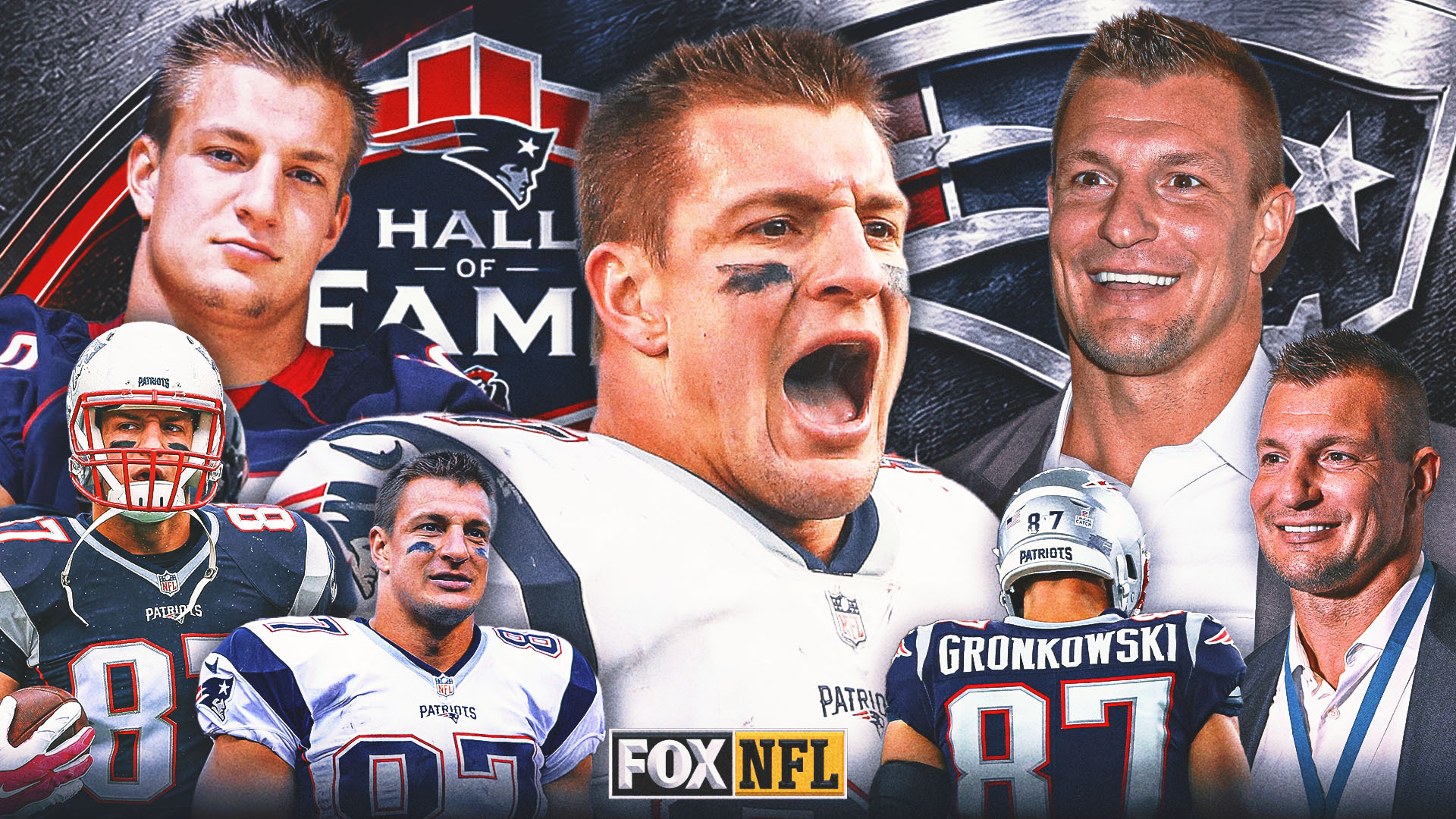
You can’t be serious when you’re smiling all the time. Unless you’re Gronk. Back in 2010, the New England Patriots had yet to figure that out. So they didn’t know what to make of Rob Gronkowski, then an Arizona draft prospect. He seemed like the meathead to rule all meatheads. A human biceps. And it seemed like an oxymoron when, after the Patriots drafted Gronk in the second round, he put on a Patriots helmet and began shaking and screaming like he was talking in tongues. At that same moment, in the team’s war room, Bill Belichick stared down college scout Jon Robinson, who had championed Gronkowski’s draft profile. Throughout a turbulent draft process, it was Robinson who had pushed the legendary coach to draft the tight end. “Bill’s just looking at me like, ‘Why the hell did I listen to you?’ And I’m just praying, ‘Lord, help me. I just hope this works out,’” Robinson told me. The helmet incident was … memorable. “We were a pretty buttoned-up organization, and my man was not buttoned up,” said Brian Ferentz, who served as Gronkowski’s position coach for his first two years. “I remember watching that being like, ‘Oh my God, like this guy cannot make it here. He will not make it here.’ “And I gotta tell you, though, I couldn’t be more wrong.” When Gronkowski arrived in New England, it wasn’t immediately apparent that he would transform into one of the best tight ends in the league. But by his second season, it was apparent that he would transform into the best tight end in Patriots’ history — and probably the best of all time. Belichick told me that Gronkowski was “the best, most complete tight end in football.” “This guy became a f—ing Beatle,” former Patriots receiver Julian Edelman told me. In speaking to multiple players and staffers from the 2010 and 2011 Patriots, it’s abundantly clear that Gronkowski was an unusual match for New England. And even if it sounds contradictory — like smiling when you’re serious — he was also a perfect match for the Patriots. “It was a match made in heaven,” Gronkowski told me. “I didn’t know anything about ‘The Patriot Way,’ how the organization was run. I didn’t know any of the [Super Bowl] expectations or anything like that. But I love big expectations, and I really noticed them when I first stepped foot in the building.” To celebrate Gronkowski’s induction into the Patriots’ Hall of Fame, I went back to where it all began to unearth the birth of the legend of “The Gronk” — with flashbacks to pop quizzes, lethal hangovers, sly smirks from Belichick and, of course, iconic performances on the gridiron. Robinson was the Patriots’ director of college scouting when Gronkowski was a prospect, and he was a big fan. The Arizona tight end didn’t exactly make Robinson’s job easy, though. Before the 2010 NFL Combine, Belichick asked his top scouts to present players who looked like future first-rounders. Robinson picked Gronkowski. “We wanted a guy that could block [Giants All-Pro defensive end] Michael Strahan and that could get open against [Ravens All-Pro safety] Ed Reed,” Robinson told me. Gronkowski had a shot to be that. So just before his interview with the Patriots at the combine, Belichick asked Robinson: “This is the guy you like, right?” Robinson nodded: “Yessir.” When Gronkowski entered the room, they started talking about football — until the conversation took a swerve toward what Robinson called “hot-tub talk.” It’s not a metaphor — or football jargon. It was Gronk literally talking about … a hot tub. Apparently, he and his buddies had one at Arizona. And that was a big deal for Gronk, such a big deal that he spent most of the 12-minute interview telling Belichick and the Patriots all about it. They tried to talk a little bit of football. “And he was OK with that, but he didn’t really light up like he did when it was hot-tub talk,” Robinson said. “He really got excited [about his hot tub]. I was like, ‘Oh God.’” Suffice it to say that Gronkowski didn’t seem like a quintessential Patriot. Not quite a Belichick prototype. “I wouldn’t say it was a painful 12 minutes, but it was a long 12 minutes,” Robinson told me. “I’d kind of put my name out there, like, ‘This is the guy I want.’ He didn’t completely bomb it, but let’s just say it wasn’t great. And he leaves, and Bill looks at me and goes, ‘That’s the f—er you want to take in the first round?’” Robinson bided his time after that. Because he still wanted Gronkowski, who he thought matched Belichick’s idea of what a tight end could be — on the field. So Robinson considered other angles to sell the tight end. At the time, the Patriots loved safety Patrick Chung, who’d attended Oregon, a team that Arizona played in the Pac-10. So Robinson dug up film — real videotapes back then — of the Gronkowski-Chung matchup. Gronkowski had put together a nice game: 12 catches, 143 yards and a touchdown. So when he got another chance to show Belichick some film in front of the scouting staff, Robinson pulled out those tapes. “Who’s this?” Belichick asked. “Gronkowski,” Robinson responded. “The effing guy that all he could talk about was hot tubs at the combine?” “Bill, let’s just watch the tape. It’s him versus Chung,” Robinson said. Belichick sat quietly, taking in the matchup. When it was over, Robinson waited. Finally, Belichick spoke. “Hey Nick,” Belichick said to director of player personnel Nick Caserio. “How many visits we got left?” They had three. “Get this asshole in here,” Belichick said, pointing at Gronkowski on the screen. I wish I could tell you that Gronkowski redeemed himself in his second interview. The Patriots were his last stop, and he’d been on 17 flights over the previous 15 days to meet with 15 different teams. That hadn’t stopped him from partying, so he wasn’t just jet-lagged; he was also hungover. “I needed a nap,” Gronkowski remembered on the “Spittin’ Chiclets” podcast. So Gronk napped. The Patriots put him in a holding room at Gillette Stadium, and in it, he found a table — which he laid on to rest. That’s where Ferentz found him. “He’s laying on this table in like a $2,000 Italian suit with a pair of Doc Martens on, looking like he’s going to a grunge concert or something,” Ferentz told me. Gronkowski had a plan for his interview. It was authenticity. “I’m just gonna be myself,” he remembered thinking. “I need some thrill in my life; I need some excitement in these interviews. So I’m just going all-out.” He added: “Let me tell you, it was one of the most horrendous, but best interviews of all time. It was just being truthful and, in the end, that’s what life is all about.” At one point during Gronkowski’s visit, the Patriots taught him a play called “Special.” Then, when they began the interview, they asked him to teach the play back to the coaches. Patriots offensive coordinator Bill O’Brien asked Gronkowski if the weak-side linebacker and the safety hit it, what’s going to happen? The answer was that he needed to sight-adjust. So Gronkowski starts to say: “SSssssss—” “Yeah, you’re getting it, Gronk,” O’Brien remembered saying. “You’re getting it. It’s Sss—” “Sizzle?!” Gronkowski said. “Sizzle?!” O’Brien responded. “What, did you eat at Sizzler last night? No, it’s a sight-adjust, Gronk!” The Patriots also drew up a play — then erased it. And they asked Gronkowski to draw it again. He couldn’t. “I don’t know anything. I can’t recall. But just throw me the ball, make a play,” Gronkowski reassured them. It wasn’t that reassuring. “I just remember sitting there and kind of everybody looking at each other like, ‘I don’t know about this guy,’” Ferentz said. “I walked out and called my agent,” Gronkowski told me. “I said they either just crossed me off the board — I am definitely not going there, even though they need a tight end — or they love me, and I’m going to the New England Patriots.” There wasn’t a single guy who left those meetings feeling certain that Gronkowski would be a Patriot. Except for maybe Belichick. The Patriots coach kept his affinity for the tight end under wraps, except with Caserio, who was the second in command in New England’s front office. Belichick did his homework, calling Arizona coach Mike Stoops, who made up Belichick’s mind by heaping on the praise and answering all of his questions. On draft night, Belichick quietly worked the phones as the board entered the 40s. The Patriots picked Rutgers cornerback Devin McCourty in Round 1. They thought he was a no-nonsense blue-chip player and were absolutely right. “In the first round with Devin, we knew we had pocket aces,” Robinson said. Perhaps that was why Belichick felt he could select someone a little riskier in Round 2. Gronkowski also flunked roughly 30% of his medical examinations. He sat out the 2009 season with a back injury — a severe vertebral disc hernia — that had teams removing him from their board altogether. It’s why he fell out of the first round. But when the board hit 42nd overall, Belichick was on the phone with Raiders owner Al Davis to make a trade — leapfrogging the Ravens, who Belichick feared had interest in drafting Gronkowski to replace Todd Heap. Robinson, who’d twisted his stomach into knots advocating for Gronkowski, had no idea who Belichick was about to take. “Are we going to get the trade in?” Robinson asked. Belichick nodded subtly, still on the phone. “Who would you take?” “Your f—ing guy,” Belichick deadpanned. “Gronkowski.” Gronkowski showed up to the Patriots’ rookie minicamp with a smile. Try as they might, his coaches couldn’t wipe it off. He was upbeat because he was Gronk, but also because he had studied up on the team’s depth chart. “I was excited to get drafted by the Patriots because I was scouting every team. I wanted to go to a team that needed a tight end,” Gronkowski told me. “I saw that the Patriots were in need.” If Gronkowski came in with a purpose, it wasn’t immediately apparent. “He looked like a kid lost at an airport. He had no clue where he was supposed to go. Like, ‘Where’s his parent?'” Edelman, then a second-year Patriots receiver and now a FOX Sports analyst, told me. “But while he was doing that, he had a lovable smile and energy that you’re like, ‘Oh man, this guy’s gonna be awesome.'” Perhaps because Gronkowski had come in with that big smile (and a reputation as a goof), O’Brien felt the urge to get him in line — even if the tight end wasn’t exactly goofing off. “He was in a good mood and all that. And I was just like, ‘Alright, man, I hope you know this [playbook].’ And he’s like, ‘I already know it. I know everything. I know it. I’m good.’ This is like the second day. So I’m like, ‘OK, let’s see how well you know it. Why don’t you show up tomorrow morning, meet me out on the practice field? I’m gonna test you on every single empty formation that we have in this offense.’ “And he’s like, ‘Yeah, no problem.’ And I was like, OK, this guy’s pretty ballsy.” At that time, the Patriots had 40 empty formations. So Gronk had to get into his playbook and learn them. The next day? “He got every single one of them right,” O’Brien told me. “I made him the Y, and then I made him the F. Those were the two tight end positions. He knew where to line up. He was laughing. He was taunting me, and that was the first inclination that I was like, ‘This guy is smart as hell.'” That aptitude for the game was the most important piece of Gronkowski’s development. And it was the most necessary element in clearing up the uncertainty about his ascent. He was massive: 6-foot-6 and 265 pounds, an elite athlete with fine motor skills as a pass-catcher to match his bulky brute force. There was no question he looked the part. But he also brought another element. “He’s extremely coachable,” Edelman told me. “If you tell him something, he’s going to do it how you told him to do it, and then he’s going to do it a couple more times, and he’s going to have his own feel. He’s going to bring his own kind of twist to it.” Gronkowski didn’t exactly ace the pre-draft interview process because of the offense he played in at Arizona. It was an Air Raid system that “ran like three plays,” according to Ferentz. The Patriots quickly realized that no one had ever taken the time to teach him how to read coverages or much of anything about football. He was a product of pure instinct. “That’s what makes Bill [Belichick] the best of all time,” Ferentz said. “He’s one of the greatest teachers that probably this world’s ever seen. He just happens to teach Cover-2, and that’s, to me, what the thing was early with Rob. He doesn’t know what Cover-2 is. He has no idea, but not because he’s dumb. It’s because it’s never been taught to him.” Gronkowski spent the early phase of his rookie season as a role player, taking only a small percentage of offensive snaps. Behind the scenes, he spent 20 to 30 minutes after each practice working against linebacker Gary Guyton. That was Tom Brady’s idea — whipping Gronkowski into shape and forcing him to learn the offense quickly. Brady was so relentless that the coaches often had to blow the whistle every day to stop the sessions. Even “No Days Off” Belichick would tell Brady and Gronk to give it a rest: “That’s it, that’s it. We got to get him off the field.” “Tom was hard on Gronk early on,” O’Brien told me. “I mean, he drove him. I think Gronk would be the first to tell you that Tom had a lot to do with his success the first two years because he drove him to be great. Tom knew how good the guy was going to be, and that was Tom’s way of getting it out of him.” Belichick was famous for pop quizzes on Wednesday, digging into the scouting report on the upcoming opponent — and asking about … anything. “Gronk was a rookie. … And as an assistant coach, you would alert these guys, ‘Hey man, you better know your stuff, because he’s going to test you,’” O’Brien said. Belichick might ask when the opponent had last won a Super Bowl. He might ask about the punter’s average yards per attempt. In Gronkowski’s case, Belichick kept it simple: Who is the opponent’s middle linebacker? “Gronk had his scoutbook between his feet, and he looked up and Bill — then down. And he’s moving the pages with his toes,” O’Brien said. “And Bill goes, ‘Jesus Christ, Gronk.’” As the years went on, Gronkowski partied less and less — even if he preserved his persona as The Party At All Times. As a rookie, he actually was The Party At All Times. And sometimes, that came back to bite him, including one Sunday night after a big Halloween game. “He had a hell of a night Sunday night, and he came in there, and we’re just dying laughing,” McCourty told me. “And I’m sitting there, and I’m like, ‘This dude is dead. Like, I mean, almost like a zombie.’ And he does sauna to cold tub to sauna religiously for maybe an hour. He’s going back and forth, sweating it out, then jumping in the cold tub. “And we get in that 12 o’clock meeting for the day after the game, and this dude looks normal. He has energy, and I remember sitting there being like, ‘That is one of the biggest transformations I’ve ever seen a guy have.’ … Probably one of the most impressive things I saw him do our rookie year. I’m sure Coach still knew he was hungover.” The dude got away with more than any other Patriot under Belichick’s watch. Later in Gronk’s career, the Patriots had a rough game, and receiver Chris Hogan committed a handful of penalties. So Belichick made an example of Hogan, formerly an undrafted rookie without much established production prior to joining New England in 2016. So Belichick said to him: “You’re not good enough to make all these mistakes.” Players remembered leaving the meeting shocked at how hard the coach went after a role player like Hogan. Gronkowski committed three penalties in the following game, so everyone entered the Monday meeting on edge. They knew Gronk was in for it. Until he wasn’t. Belichick was critical, but there was no catastrophizing, just fair constructive criticism. “Well, well, I guess Gronk is worth two or three penalties, huh, Bill?” Edelman said after the meeting from the back of the room. Belichick responded only with a wry smile as he turned to leave. “Gronk was a true golden boy,” McCourty said. “Of all the offensive players, I think Gronk was his favorite,” former backup quarterback Brian Hoyer told me. When the 2011 season rolled around, Gronkowski wasn’t just an every-snap player; he was the best tight end in the NFL — and, perhaps, the most dominant playmaker in the league. He finished that season with 90 catches for 1,327 receiving yards (sixth all time in a single season among tight ends) and 17 touchdowns (most ever among tight ends). He got there by embracing a transformation. He had the raw physical tools. He had a curiosity and discipline to learn the game. But he was unrefined as a professional, as a route runner, as an in-line blocker — and, just generally, as an NFL tight end. With help from Brady, Belichick and so many others, “The Gronk” morphed into someone else. He turned into a future Hall of Famer. And by the end of his career, he was third all time among tight ends with 92 receiving touchdowns. He was sixth all time among tight ends with 9,286 receiving yards. And he had 621 receptions, 11th-most all time among tight ends. “It’s not like he was a dominant player on a s— team,” Edelman told me. “No, we were America’s target from the day he got on the roster. So to have that kind of performance, that should tell you something. And it wasn’t just in the pass game. It was as an all-around tight end.” The only enemies Gronkowski made along the way were the guys who had to cover him — or who got blocked by him. Every coach and every teammate was eager to share a Gronk story — and to testify to his unrelenting character and smarts. “The unique thing about our business is we get a chance to rub shoulders sometimes with some of the greats, and Rob is one of the greats,” Ferentz said. “It is a highlight of my career that I was even around him, because he’s that kind of person and that kind of player. He’s special, and every accolade that he’s gotten is well-deserved. Every accolade that he will get is well-deserved. “But I can’t say enough about who he is.” Gronk changed himself. He changed others. He even softened Belichick. “Gronk’s unstoppable ability was a direct result of his determination to excel in every aspect of professional football,” Belichick said in a statement. “As a rookie in 2010, Rob developed his solid physical traits into an elite blend of strength, speed and explosiveness. He was driven to be the best, which was illustrated by his daily post-practice routine perfecting his receiving skills and becoming in complete lockstep with Tom, and countless one-on-one drills running pass patterns against Gary Guyton long after everyone had left the field. By 2011, Rob was a major force for the Patriots’ offense and a player that opponents game-planned to stop, usually unsuccessfully.” “Congratulations, Rob,” Belichick concluded. “Your work made you the best, most complete tight end in football.” I read Belichick’s comments to Gronkowski over the phone. And here’s what he said. “It means everything. … I wanted to make Coach Belichick proud,” Gronk told me. “To hear that, man, it’s humbling. It really is. It also makes me happy because all the hard work was paying off. All the hard work won us games. … It truly makes you feel proud of yourself that all the hard work, all the hard times, they were worth it. They really were.” There are more layers than meet the eye with Gronk. He never seemed like the kind of guy who would make the perfect Patriot. He might not have seemed like the kind of player who could have a long career based on his physical style of play. He might not have seemed like a guy who’d learn to love film study or get on Belichick’s good side. But that’s the beauty of Gronkowski. Of Gronk. Of Rob. You can’t pin him down. Maybe because even when he’s smiling, he’s dead serious. Read More
Latest Sports News from FOX Sports nfl
Latest Posts

Sheriff’s deputies capture massive alligator in Okeechobee County
NFL Trade Deadline: Where Will Top Targets Go? Execs Help Us Predict Landing Spots
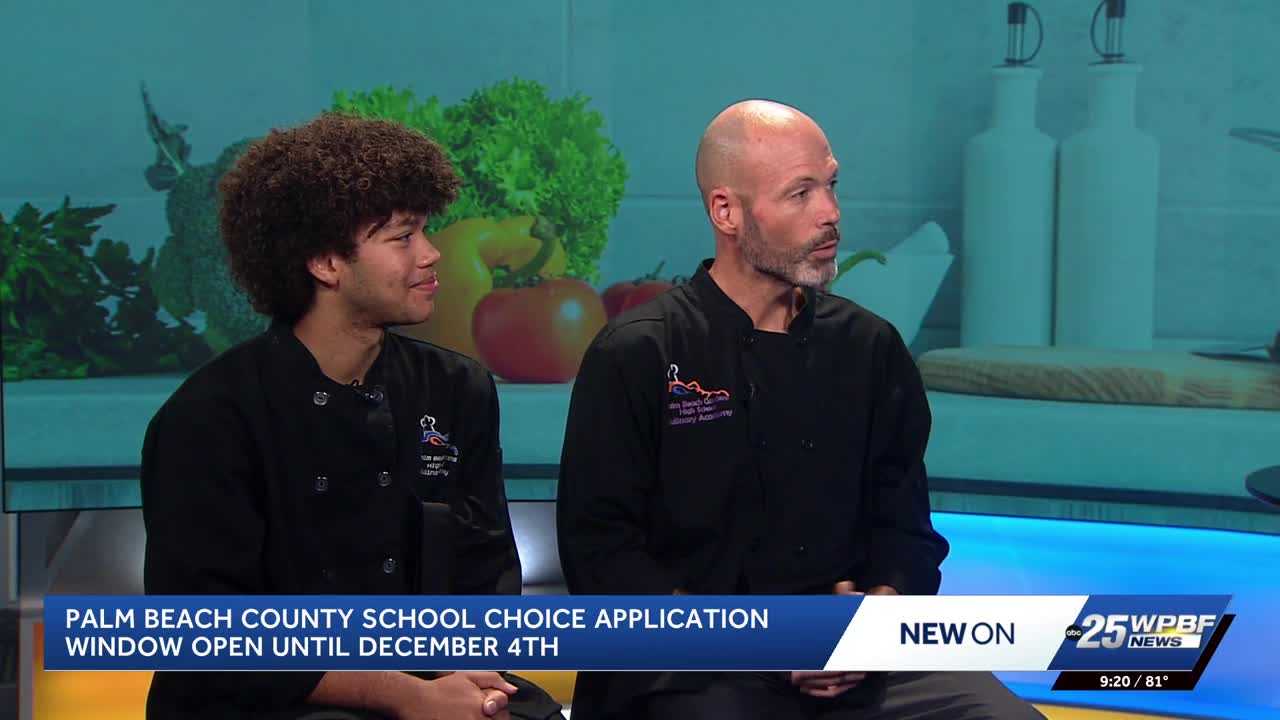
Palm Beach County students find career and life lessons at Palm Beach Gardens culinary academy
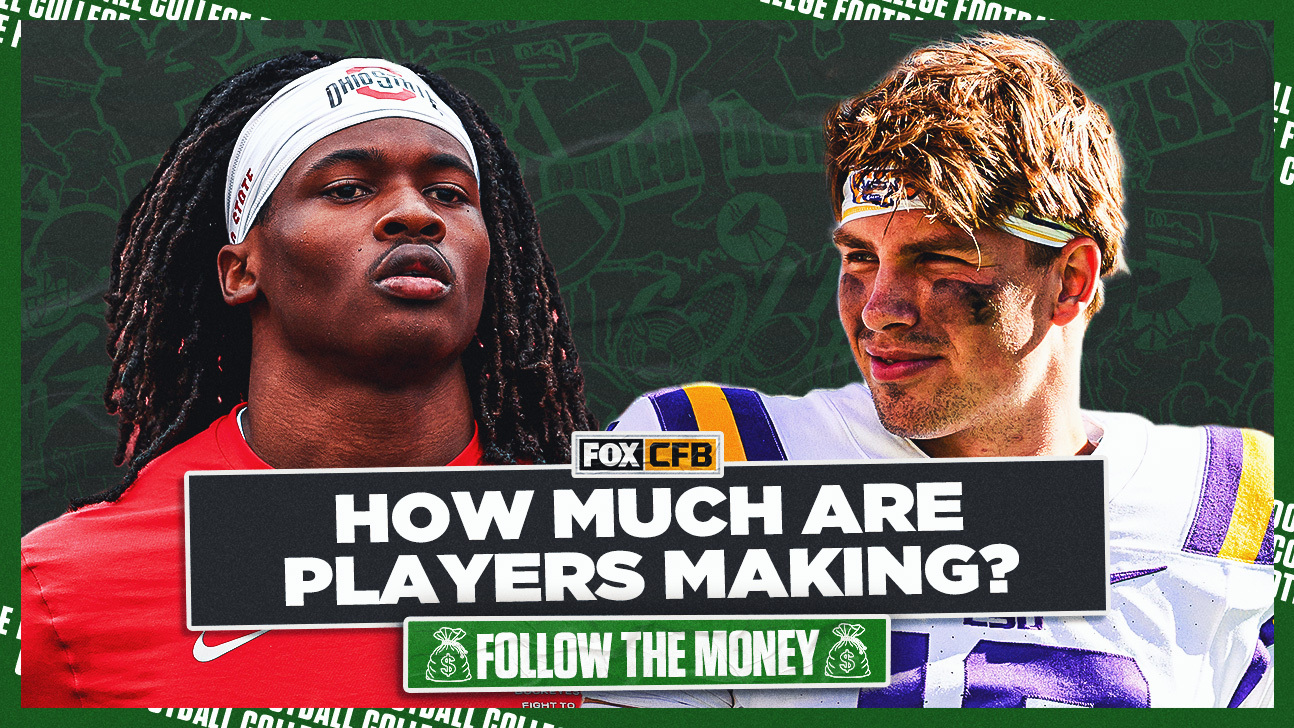
How Much Are College Football Players Really Making? Position-By-Position Breakdown
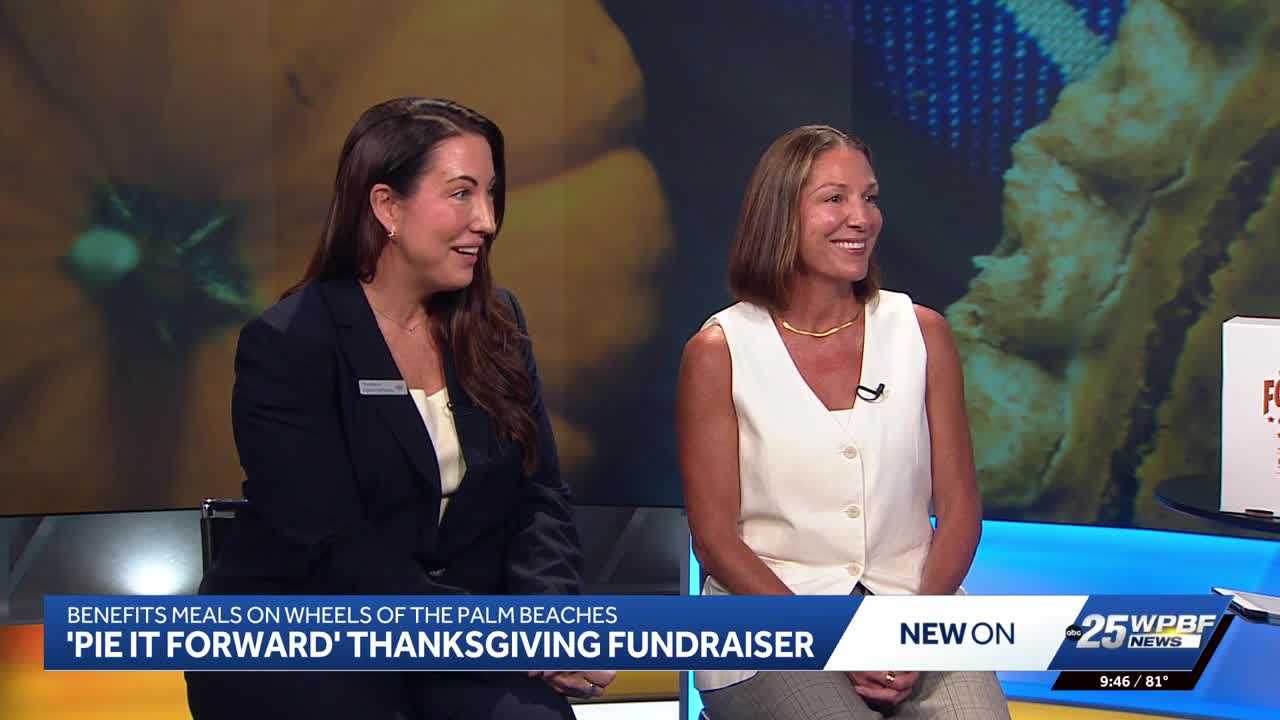
Palm Beach fundraiser helps seniors and veterans with Thanksgiving pies
Current Show
Upcoming shows
Slomin’s